
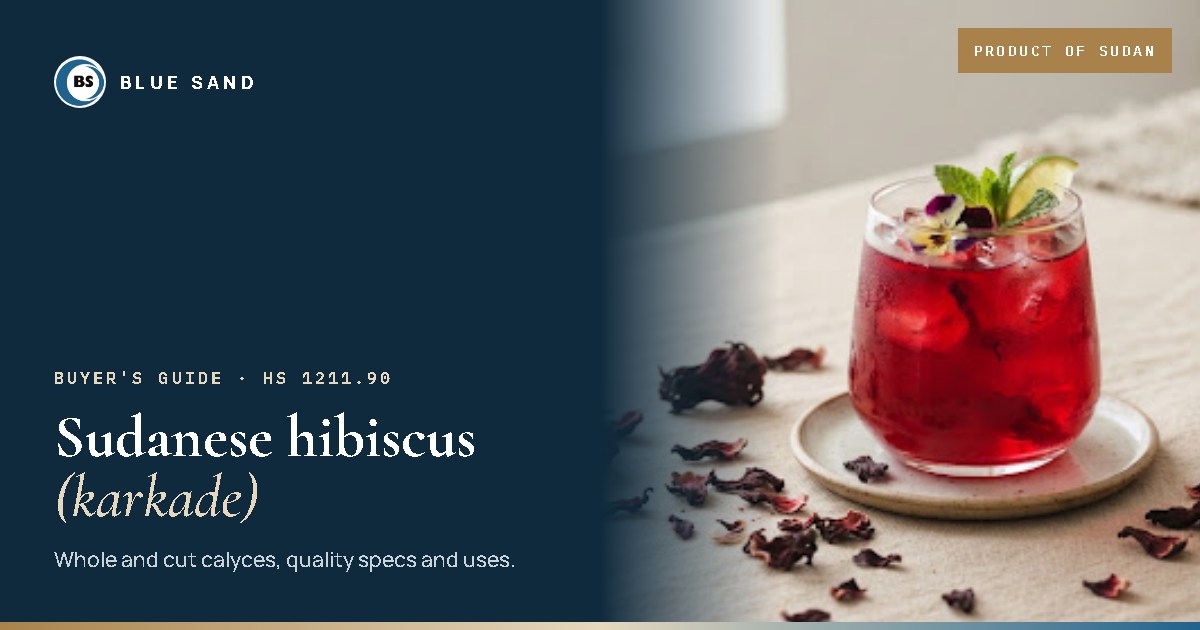
Karkade, the dried calyx of the hibiscus plant (Hibiscus sabdariffa), is one of Sudan’s best-known botanical exports. Grown mainly in Kordofan and Darfur and dried in the sun, Sudanese hibiscus is prized by tea blenders, beverage makers and extract producers for its deep crimson colour and strong, tart flavour. This guide explains the product, the grades and what to put in your specification.
What buyers actually buy: the calyx
The part of the hibiscus used in tea and drinks is not the petal but the calyx: the fleshy, deep-red cup that surrounds the seed pod. After harvest, the calyces are separated from the pods and dried in the sun, which concentrates their colour and flavour.
Whole or cut
- Whole calyces: dried calyces as harvested. Used for loose-leaf tea, infusions, drinks made by steeping, and extraction.
- Cut calyces: calyces cut into smaller pieces, often to a size suitable for tea bags (sometimes called TBC, tea bag cut). Cut sizes are agreed in the contract.
The values buyers specify
- Form: whole or cut, and the cut size.
- Colour: a deep, even red is the main quality signal for Sudanese hibiscus.
- Moisture: properly sun-dried calyces store well. Agree the maximum in your contract.
- Foreign matter: seeds, stems, dust and other plant material removed during cleaning.
- Food safety: hibiscus for tea and food often needs microbiology and pesticide residue tests, depending on the market. Confirm the current rules with your customs broker and agree any lab analysis before shipment.
All values should be written into the contract and confirmed by lot analysis before the goods ship.
Uses for Sudanese hibiscus
- Herbal tea: a popular caffeine-free infusion, hot or iced
- Beverages: cold drinks, syrups and juice blends
- Natural colourant: the red pigments (anthocyanins) colour food and drinks naturally
- Extracts and nutraceuticals: powders and extracts for supplements
- Cosmetics: extracts used in skin and hair products
Packing and container loads
Sudanese hibiscus is usually packed in PP bags. Because dried calyces are light and bulky, a container holds fewer tonnes than it would of seeds or grain. Ask your supplier for the exact loading per container.
Documents that travel with your hibiscus
- Certificate of Origin
- Phytosanitary Certificate
- Fumigation Certificate, where required
- Laboratory analysis, where agreed
- Commercial invoice, packing list and Bill of Lading
Our guide to export documents from Sudan explains each one.
How to order
- Send your specification: whole or cut, cut size, quantity per shipment and per year, destination port.
- Approve a sample to check colour and cleanliness before you commit to a bulk order.
- Agree terms: FOB Port Sudan, or CIF to your destination port.
- Shipment: the calyces are cleaned, bagged, inspected and loaded at Port Sudan.
- Documents to you for customs clearance at destination.
Hibiscus specification at a glance
| Parameter | Blue Sand offer |
|---|---|
| HS code | 1211.90 |
| Origin | Kordofan, Sudan |
| Drying | Sun-dried |
| Form | Whole calyces / cut |
| Packing | PP bags |
| Terms | FOB Port Sudan, CIF on request |
Typical values; confirmed per contract against lot analysis.
Ready to source Sudanese hibiscus?
Send us the form, quantity and destination port, and our export team will reply with pricing, lead time and sample availability. See our hibiscus page, download the catalogue or request a quote.