
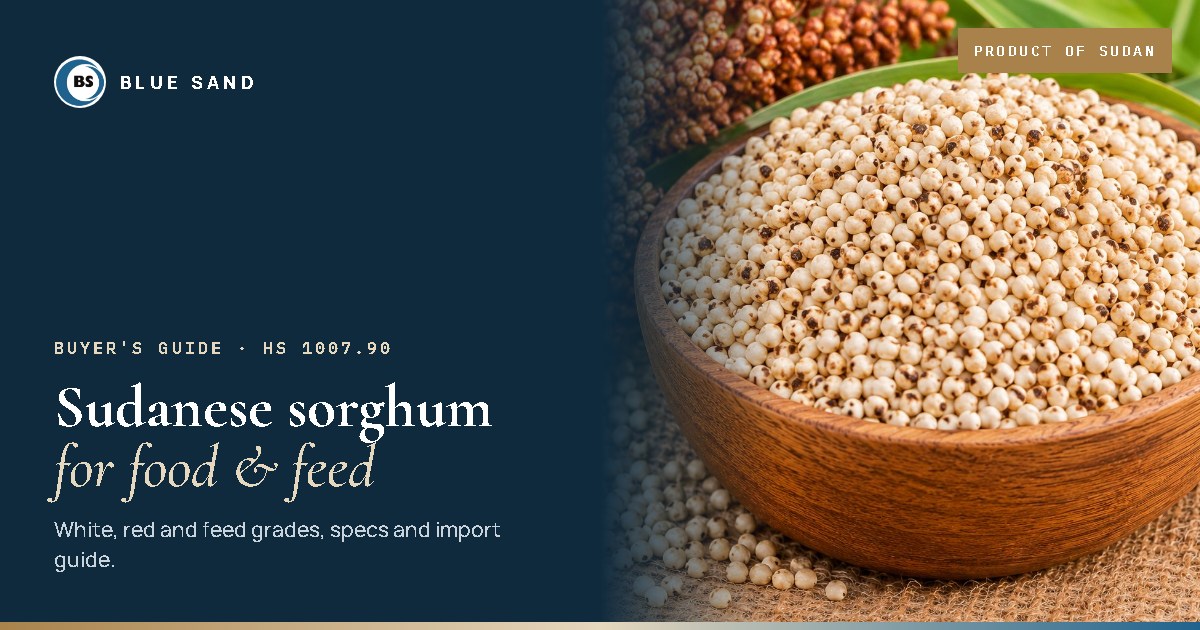
Sorghum is Sudan’s most important cereal crop. It is grown across the country’s vast rain-fed farmlands, including the eastern Gedaref region, and it feeds both people and livestock. For importers, millers and feed manufacturers, Sudanese sorghum is a practical grain to source in bulk. This guide explains the main types, the values buyers specify and how to order.
White, red and feed grade
- White sorghum: light-coloured grain with a mild taste, used for human food: flour, porridge, flatbreads and snacks. Sorghum flour is naturally gluten-free, which makes it interesting for specialty bakery.
- Red sorghum: darker grain. Red and brown varieties can contain more tannins, which affects taste and digestibility, so it is mostly used in animal feed.
- Feed grade: sorghum sold mainly for animal and poultry feed, where price and nutritional value matter more than colour.
Tell your supplier the end use: food buyers usually need tighter limits on colour, foreign matter and broken grains than feed buyers.
The values buyers specify
- Type: white, red or feed grade.
- Moisture: we offer 12%–14%. Lower moisture reduces the risk of mould and insects in storage.
- Foreign matter: dust, stones, straw and other seeds. We offer 1%–3%, depending on grade.
- Broken and damaged grains: an agreed maximum for broken, shrivelled and insect-damaged grain.
- Food safety: for food use, check your market’s requirements, for example mycotoxin and pesticide residue tests, and agree any lab analysis before shipment.
All values should be written into the contract and confirmed by lot analysis before the goods ship.
Uses for Sudanese sorghum
- Flour milling: sorghum flour and meal for food markets
- Animal and poultry feed: an energy grain in compound feed
- Wholesale and food staples: whole grain for markets where sorghum is a traditional staple
Packing and container loads
Sudanese sorghum is usually packed in PP bags and shipped in 20 ft or 40 ft containers. For very large volumes, ask about bulk options. Your supplier will confirm the quantity per container for your order.
Documents that travel with your sorghum
- Certificate of Origin
- Phytosanitary Certificate
- Fumigation Certificate
- Commercial invoice, packing list and Bill of Lading
Our guide to export documents from Sudan explains each one.
How to order
- Send your specification: type, moisture and foreign matter limits, quantity per shipment and per year, destination port.
- Approve a sample before you commit to a bulk order.
- Agree terms: FOB Port Sudan, or CIF to your destination port.
- Shipment: the lot is cleaned, bagged, inspected and loaded at Port Sudan.
- Documents to you for customs clearance at destination.
Sorghum specification at a glance
| Parameter | Blue Sand offer |
|---|---|
| HS code | 1007.90 |
| Types | White / red / feed grade |
| Moisture | 12%–14% |
| Foreign matter | 1%–3% |
| Packing | PP bags |
| Terms | FOB Port Sudan, CIF on request |
Typical values; confirmed per contract against lot analysis.
Ready to source Sudanese sorghum?
Send us the type, quantity and destination port, and our export team will reply with pricing, lead time and sample availability. See our sorghum page, download the catalogue or request a quote.